You've stood in the supplement aisle (or scrolled past 40 ads) and been hit with the same visual: a pastel tub, a photo of a fit woman mid-stretch, and a claim that this powder was "formulated for women." But here's what that label almost never tells you: what specific goal it's optimized for, how the protein is processed, or whether the formula actually behaves differently than any standard protein tub with a different color scheme.
The honest answer to which protein powder is right for women comes down to one question: What is your actual goal? Lean muscle support, weight management, and clean whole-food nutrition each require a different protein profile, processing method, and stack of supporting ingredients. A whey protein isolate formula built for fast absorption does something fundamentally different in your body than a dairy-free blend with greens, MCT oil, reishi, and turmeric. Neither is wrong, but using the wrong one for your goal is.
Here's what's actually happening in your body, and how to match the right formula to what you're genuinely trying to accomplish.
What Is Actually Happening in Your Body When You Don't Hit Your Protein Goals?
What Does Protein Powder Actually Do for Women Specifically?
Protein's role in female physiology goes beyond muscle repair. Women face specific physiological pressures that make consistent, quality protein intake particularly relevant: muscle protein synthesis declines with estrogen fluctuation across the monthly cycle, bone density maintenance requires adequate protein alongside calcium, and women typically carry less total muscle mass, meaning the margin for under-eating protein is narrower.
Research suggests that active women benefit from protein intake of 1.2-2.0 g/kg body weight per day (0.6-0.9 g/lb body weight per day) to meaningfully support muscle recovery and athletic performance, above the 0.8 g/kg baseline recommended for sedentary adults. For a 140-lb (63 kg) woman training four days per week, that translates to roughly 75–126 grams of protein per day. Whole food alone often closes that gap, but not always reliably, particularly around training sessions when protein source and digestibility become meaningful variables.
The mechanism that matters here is muscle protein synthesis (MPS), the biological process that repairs and rebuilds muscle fibers after exercise. MPS requires a sufficient concentration of essential amino acids (EAAs), particularly leucine, to activate the mTOR pathway that signals muscle repair. Leucine acts as the trigger: without enough of it in a single serving, the anabolic signal doesn't fully fire, regardless of total daily protein intake.

Why Doesn't Eating More General Protein Always Translate to the Results Women Want?
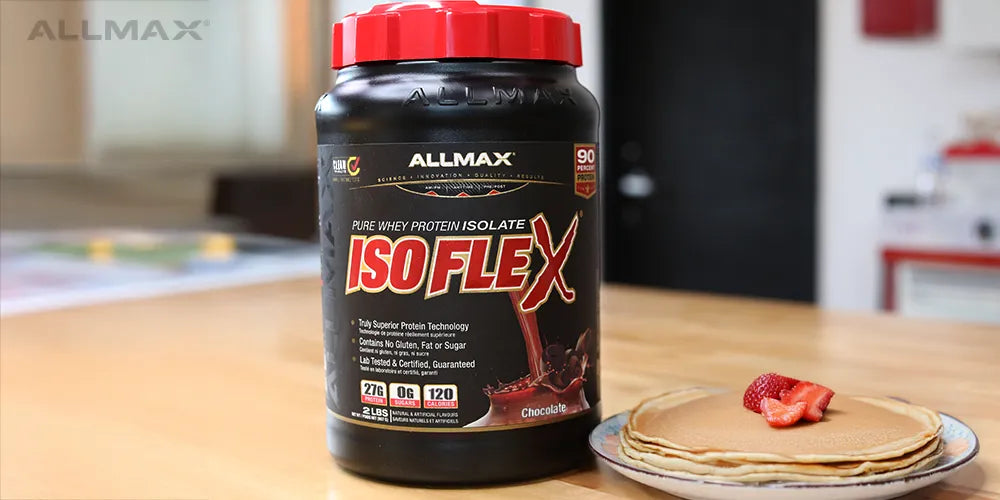
Here's the gap most generic articles skip: protein quality, digestibility, and amino acid density vary enormously between protein sources. A serving of whey protein isolate with 27g of protein and a high leucine concentration behaves very differently in the body than a collagen-based protein (which lacks several essential amino acids entirely) or an under-dosed plant blend that delivers 15g of protein with incomplete EAA coverage.
Women shopping in the "protein for women" category frequently encounter products heavy on collagen peptides, which support skin, hair, and joint health but are not complete protein sources and do not meaningfully drive muscle protein synthesis. That's a feature worth knowing, not a flaw, but it means collagen protein and training-focused protein serve different purposes, and confusing the two produces disappointing results.
Why Don't the Most Common Solutions Actually Work for Women?
Why Doesn't Standard Whey Concentrate Powder Work for Women With Digestive Sensitivity?
The most common complaint from women who've tried protein powders before: bloating, gas, and digestive discomfort within 30-60 minutes of drinking a shake. This isn't a sensitivity to protein itself; it's almost always a reaction to residual lactose in whey protein concentrate (WPC), which retains lactose from the dairy processing. Women who tolerate dairy without issue can still experience digestive discomfort from concentrated whey, simply because the lactose load per serving is higher than in a glass of milk.
Whey protein isolate (WPI), by contrast, undergoes additional processing, specifically ultrafiltration or ion-exchange, that removes most of the lactose and fat. The result is a cleaner protein fraction that is typically 99% lactose-free and offers a higher protein-per-gram yield. This is why switching from WPC to WPI resolves digestive discomfort for many people, not because their body changed, but because the formula did.
Why Do Plant Protein Powders Sometimes Underperform for Muscle Support?
Plant proteins, such as pea, rice, hemp, and soy, are frequently marketed toward women, and for good reason: they're dairy-free, and appeal to people with dietary preferences around animal products. The problem arises when a plant blend delivers an incomplete essential amino acid profile or an underdosed serving. Neither pea nor rice protein alone provides all nine essential amino acids in adequate ratios. Pea protein is low in methionine, and rice protein is low in lysine. Combining them (pea + rice) yields a more complete profile, but the combined dose must still be high enough to exceed the leucine threshold for activating muscle protein synthesis.
A plant-based protein powder delivering 15g per serving falls below the 20-30g range supported by research and may not adequately trigger MPS, regardless of how clean the ingredient list is.
What Actually Works for Women Based on Their Specific Goal?
This is where the answer stops being generic. The right protein powder for women depends entirely on which of three primary goals is driving the purchase decision: building lean muscle alongside fat loss, retaining muscle while managing body composition in a calorie deficit, or supporting consistent training with a clean, minimally processed formula. The table below shows how the three ALLMAX options compare across the specs that actually drive results.